


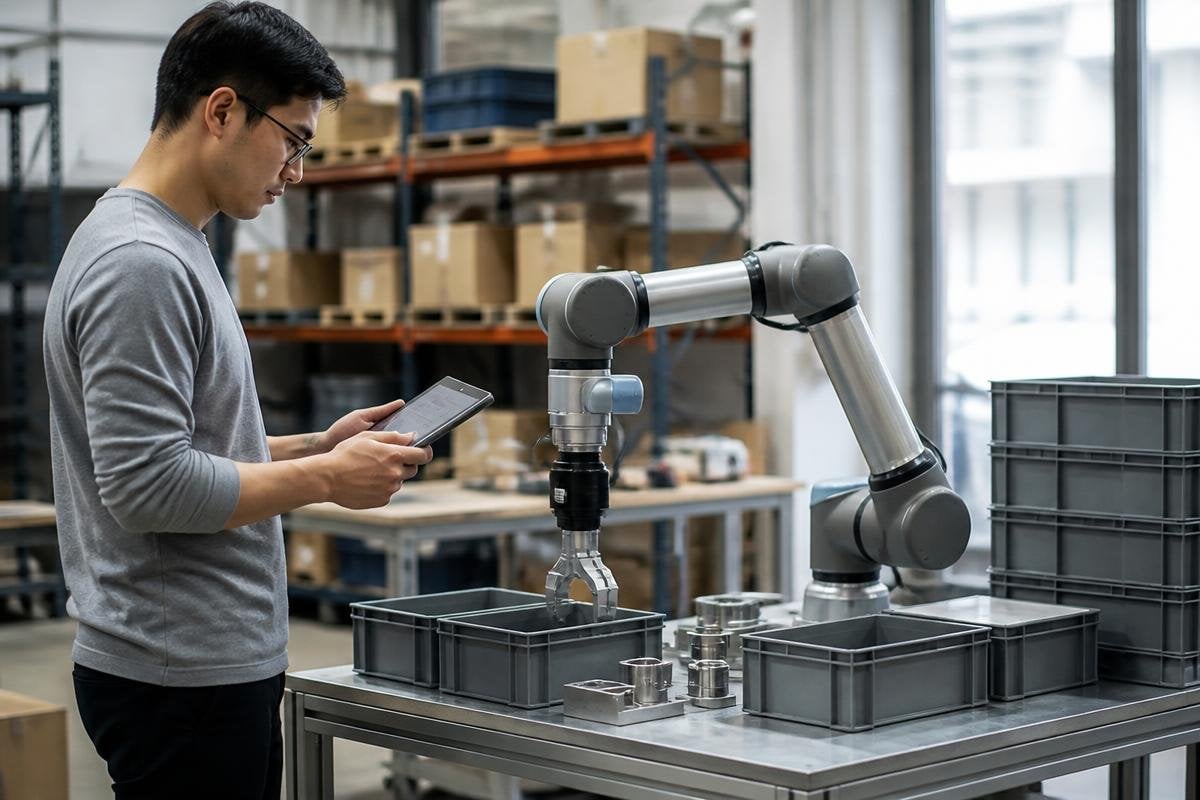
A lower robot price changes the buying question. Work that once needed a large project may now fit a small production line, warehouse task, or research lab, but the hardware bill is only one part of the cost.
Quick read
- Cheaper cameras, processors, motors, and grippers lower the entry price for automation.
- Software, safety checks, integration, and maintenance still shape the final bill.
- Small firms gain options when they start with one narrow, repeatable task.
The hardware bill is only the start
A robot system needs more than the arm or mobile base. You may also need a gripper, cameras, a control computer, a safety scanner, mounting parts, network equipment, and changes to the work area.
That list matters because a low unit price can hide a large setup job.
A robot that picks one known item from a fixed position may need little extra equipment. Systems handling mixed items need better sensing, more software work, and more time to test each case.
The savings still matter. Lower prices let a company test one task without committing to a large fleet. They also make spare hardware easier to keep on site, which can reduce delays when a motor, camera, or power supply fails.
Cheaper parts change the first project
Robotics buyers once had to reserve automation for work with high volume and steady conditions. Lower hardware costs make smaller jobs easier to review, such as moving bins between two fixed points, checking parts with a camera, or loading the same item into a machine.
The task still needs a clear return. A robot that saves one hour of labor each week may not cover integration and service costs. Repeated work through each shift has a stronger case, especially when the process already has fixed locations and known objects.
This is where modular hardware helps. A standard controller, camera mount, or gripper can move from a test cell to a later project. That reuse cuts new design work, though it doesn’t remove the need to check reach, payload, cycle time, and safety for each task.
Software takes a larger share of the work
As hardware prices fall, software and integration can make up more of the project cost. The robot needs instructions for where to move, what to detect, and what to do when an object is missing or out of place.
Those edge cases decide whether the system works on a real floor. A clean demonstration with one box says little about damaged packaging, blocked paths, changing light, or a worker entering the area. Buyers should ask to see the system handle the failures that occur during a normal shift.
A cheaper robot still carries installation, service, and failed-run costs. Robot24.com’s reporting on robotics deployments can show where those costs appear beside a machine’s stated limits, giving a buyer a firmer basis for judging the price.
Where the savings stop
Lower hardware prices don’t remove safety duties or service needs. A robot still needs a risk review, safe stopping behavior, clear access rules, and a plan for faults. Mobile systems may also need maps, LiDAR, charging space, and routes that keep people and machines apart.
Support can matter as much as the purchase price. Ask who repairs the robot, how long spare parts remain available, and whether the control software can run without a permanent internet connection. A cheap machine that waits weeks for one part can cost more than a higher-priced system that a local technician can fix.
I’d judge a low-cost robot by the job it can finish without constant human rescue, not by its hardware price alone.
A buyer’s decision check
Use these points before approving a pilot:
- Name the task: Write the exact start point, end point, object, and handoff.
- Measure the work: Record cycle time, items per shift, errors, and staff time.
- Price the full cell: Add tools, sensors, safety parts, installation, training, and service.
- Test bad cases: Include missing parts, blocked routes, poor lighting, and damaged items.
- Plan the repair: Confirm spare parts, response time, software access, and local support.
- Set a stop rule: Decide the cost, error rate, and uptime the pilot must reach.
That process keeps a lower hardware price in its proper place. It opens more doors for small automation projects, while the task, support plan, and measured result decide which projects deserve a second unit.
